2026 Top Yard Cups With Lids And Straws for Global Buyers

Time:2026-10-28 Author:Ethan
0%

The 2026 guide to Yard Cups With Lids And Straws begins with a practical question: what makes a tall cup reliable beyond its appearance? Global buyers need more than bright colors and impressive capacity. They need secure lids, comfortable straws, stable bases, and materials suited to repeated daily use.

William McDonough, a leading circular-design expert, offers a useful reminder: “Waste equals food.” His principle encourages buyers to examine material choices, production waste, packaging, and end-of-life options. For yard cups, that means checking food-contact documentation, plastic composition, leak resistance, and the realistic availability of recycling systems. Local requirements differ. Verification remains essential.

A strong supplier should explain its testing process clearly. Ask how the lid performs when the cup is carried across a busy stadium or placed beside a pool. Check whether the straw bends, cracks, or pulls loose after repeated use. Small details matter. A silicone seal may prevent spills, while a textured base can reduce tipping on outdoor tables.

This guide compares Yard Cups With Lids And Straws for promotional programs, events, hospitality businesses, and retail channels. It considers design, customization, durability, cleaning guidance, packaging, lead times, and supplier communication. Not every attractive cup is a dependable cup. That is an uncomfortable truth.

Buyers may also overestimate “reusable” claims without reviewing actual usage patterns. A product can be technically reusable yet rarely reused. Practical design matters more than slogans. The best choice balances appearance, performance, cost, and responsible sourcing across different markets.
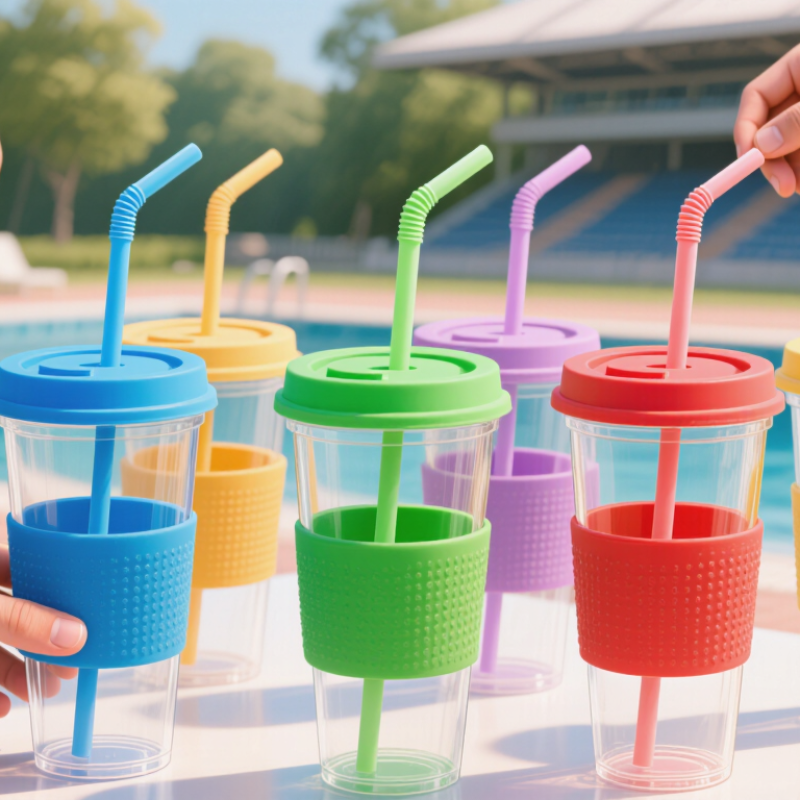
2026 Top Yard Cups With Lids And Straws for Global Buyers

What Yard Cups With Lids and Straws Are and How They Work

Yard cups with lids and straws are oversized drinking containers designed for parties, outdoor events, and promotional use. Their tall shape holds more liquid than a standard tumbler. A fitted lid reduces spills, while the straw lets users drink without lifting the cup. Many models use food-contact plastic, such as polypropylene or PET, because these materials are lightweight and practical for shipping.

The lid usually works through a snap-fit edge or threaded seal. A small straw opening keeps the straw steady during use. Some lids include a sliding cover, which helps limit dust and splashing. In real handling, seal quality matters more than appearance. A cup may look attractive but leak when tilted inside a bag. Buyers should check the lid pressure, straw diameter, cup stability, and temperature guidance before ordering.

Cleaning also affects performance. Narrow straws can retain syrup, pulp, or flavored drink residue. A removable straw and wide cup opening make daily washing easier. I have found that very tall cups can feel unstable on uneven tables. That detail is easy to miss. Global buyers should request samples, inspect material markings, and confirm packing dimensions. Supplier claims still need verification. A clear specification sheet should cover capacity, dimensions, lid fit, reusable status, and available customization options.

Key Features to Compare in 2026 Yard Cup Designs

For global buyers, a 2026 yard cup should be judged by daily handling, not glossy renders. Grand View Research’s 2024 analysis valued the global reusable water bottle market at about US$9.8 billion in 2023. That demand is encouraging, but it does not prove every cup performs well. Compare capacity, empty weight, grip texture, and base stability. A 40-ounce cup becomes awkward when filled. Test it.

Leak control deserves close inspection. Check the silicone gasket, hinge strength, straw seal, and sliding closure separately. A tight lid should survive a sideways shake, not only a showroom display. I would not trust a loud click alone. Ask suppliers for repeated leak-test records, odor testing, and food-contact documentation for each target market. Straw diameter also matters. Narrow straws can restrict thicker drinks and frustrate users.

Material choices require honest scrutiny. The OECD’s Global Plastics Outlook reported that only 9% of plastic waste was recycled globally in 2019. Therefore, buyers should examine durability, repairability, and realistic recycling routes. Stainless steel can improve service life, while clear plastic improves visibility but may scratch faster. Check thermal performance, dishwasher instructions, color stability, and replacement-part availability. Some designs promise convenience but create difficult cleaning points around the straw and hinge. That weakness is easy to overlook. A short cleaning brush included with each cup may deliver more value than decorative packaging.

2026 Top Yard Cups With Lids And Straws for Global Buyers - Key Features to Compare in 2026 Yard Cup Designs

Comparison of common yard-cup design configurations for international sourcing. Capacities are stated in US fluid ounces and approximate milliliters; actual dimensions may vary by mold, lid structure, and insulation construction.

Yard Cup Design Nominal Capacity Approx. Height Main Body Material Lid and Straw Configuration Insulation Format Leak-Resistance Level Reusable Use Profile Cleaning and Temperature Guidance Best-Fit Buyer Requirement
Compact Everyday Yard Cup 24 fl oz
(710 ml)
22–25 cm BPA-free polypropylene or food-contact PET Screw-on lid, straight reusable straw, silicone drinking seal Single-wall Moderate
Suitable for upright carrying
Regular home, office, school, and casual outdoor use Hand wash or top-rack dishwasher when permitted; avoid hot liquids in single-wall plastic Buyers seeking lower shipping weight and an accessible retail price
Large Daily Hydration Yard Cup 32 fl oz
(950 ml)
25–28 cm BPA-free polypropylene or copolyester Wide screw lid, removable straw, flip drinking cover Single-wall Moderate
Seal depends on lid and straw port
Long work shifts, travel, commuting, and outdoor activities Top-rack dishwasher suitability depends on the material; do not use for boiling liquids Buyers prioritizing higher capacity without the weight of double-wall metal
Double-Wall Cold-Drink Yard Cup 30 fl oz
(890 ml)
24–27 cm Double-wall stainless steel with powder-coated exterior Threaded lid, removable silicone straw, gasketed straw opening Vacuum-insulated High
Not fully leak-proof when straw is open
Cold beverages, commuting, events, and extended outdoor use Hand washing is generally recommended; do not microwave; keep hot liquids away from straw lids unless specifically rated Buyers needing temperature retention, durability, and premium perceived value
Extra-Large Event Yard Cup 40 fl oz
(1,180 ml)
28–32 cm Food-contact polypropylene or copolyester Large screw lid, long straw, carry handle, splash-reduction insert Single-wall Basic to Moderate
Best kept upright
Outdoor gatherings, promotional programs, festivals, and sports spectators Hand wash is preferred for long straws; verify dishwasher clearance before mass production Buyers requiring maximum visible capacity and strong graphic decoration area
Collapsible Travel Yard Cup 20–24 fl oz
(590–710 ml)
16–23 cm
collapsed to expanded
Food-grade silicone body with polypropylene lid Foldable body, locking lid, short or telescopic straw Flexible single-wall Moderate
Locking mechanisms require inspection
Travel, camping, compact storage, and emergency beverage use Many silicone bodies tolerate hot and cold liquids, but the lid and straw must be rated separately Buyers focused on portability, storage efficiency, and flexible packing
Clear Display Yard Cup 24–30 fl oz
(710–890 ml)
23–27 cm Clear copolyester or PET suitable for cold beverages Transparent screw lid, reusable straw, optional fruit-infusion insert Single-wall Moderate
Visual inspection of closure is easy
Cold drinks, cafés, hospitality, gifting, and visual merchandising Use cool or room-temperature drinks unless the material specification allows heat; inspect for scratches and clouding Buyers valuing product visibility, color impact, and easy beverage identification
Heavy-Duty Stainless Yard Cup 30–40 fl oz
(890–1,180 ml)
25–31 cm Food-contact stainless steel, commonly 304 grade Threaded lid, silicone gasket, removable straw, wide carry handle Double-wall or vacuum-insulated High
Closure quality varies by lid design
Frequent reuse, outdoor work, road travel, and long service life Hand wash recommended; not microwave-safe; separate silicone parts for thorough drying Buyers prioritizing impact resistance, service life, and higher-end positioning
Kids and Family Yard Cup 16–20 fl oz
(470–590 ml)
18–22 cm BPA-free polypropylene or silicone components Locking flip lid, soft silicone straw, spill-reducing valve, carry loop Single-wall High for spills
Not necessarily leak-proof
School bags, family outings, car cup holders, and supervised use Use top-rack dishwasher only when approved; disassemble straw valves to prevent residue buildup Buyers requiring lighter weight, controlled flow, and child-friendly handling
Hot-and-Cold Convertible Yard Cup 24–30 fl oz
(710–890 ml)
23–28 cm Double-wall stainless steel with food-grade silicone seals Two interchangeable lids: straw lid and sealed sip lid Vacuum-insulated High with sealed lid
Moderate with straw lid
Cold drinks, tea, coffee, commuting, and all-season use Confirm heat rating of every lid component; hand wash and vent carefully before opening hot beverages Buyers seeking one vessel for multiple beverage categories and seasons

Sourcing check: Before placing an order, verify food-contact compliance for the destination market, material declarations, lid-gasket composition, straw diameter, cup-holder compatibility, carton dimensions, drop-test requirements, and the manufacturer’s dishwasher and temperature instructions.

Materials, Safety Standards, and Global Compliance Requirements

For global buyers, a yard cup is a food-contact product, not merely outdoor tableware. Polypropylene, stainless steel, and food-grade silicone can offer different safety profiles. Materials should resist cracking, staining, odor absorption, and repeated washing. A clear lid may look premium, but scratches can hide residue. That detail is often overlooked.

The European Commission requires food-contact materials to avoid transferring harmful substances under normal use. Regulation (EC) No. 1935/2004 and GMP Regulation (EC) No. 2023/2006 are key references. In the United States, suppliers commonly review FDA 21 CFR requirements for plastics, colorants, and elastomers. REACH checks chemical restrictions in the European market. LFGB testing may also be requested for products entering German-speaking markets. Requirements differ. One certificate rarely covers every destination.

Independent laboratories should test overall migration, specific migration, heavy metals, BPA, phthalates, odor, and temperature resistance. The OECD Global Plastics Outlook reported 353 million tonnes of plastic waste in 2019, making material durability and recyclability more important for buyers. Supplier files should include batch records, declarations of compliance, and test reports linked to the exact cup, lid, and straw. A report from another resin is not enough. Not always. This is a common purchasing weakness. Buyers should also inspect sealing pressure, straw fit, and dishwasher performance. Laboratory compliance matters, but real handling can reveal failures.

Choosing the Right Yard Cup for Events, Retail, and Outdoor Use

2026 Top Yard Cups With Lids And Straws for Global Buyers

Choosing the right yard cup depends on the event, sales channel, and outdoor conditions. Grand View Research reported that the global reusable water bottle market reached about USD 9.28 billion in 2023. This signals strong demand for reusable drinkware, but not every tall cup fits every buyer. For festivals, choose a wide base, a secure lid, and a flexible straw. Stability matters on grass, folding tables, and crowded seating areas. For retail, clear measurement markings, attractive colors, and compact packaging can improve shelf appeal. Some choices remain uncertain. A very tall cup looks impressive, yet it may tip easily in moving vehicles.

Material selection requires practical testing. Food-contact documents should match the destination market, including applicable United States or European requirements. Ask suppliers for migration test reports, temperature limits, cleaning guidance, and batch records. The OECD’s Global Plastics Outlook reported that only about 9% of plastic waste was recycled globally in 2019. Therefore, durable polypropylene or other suitable reusable materials may support longer product life, but durability must be verified. Straw openings also need careful inspection. Small gaps can collect syrup, dust, or beverage residue.

Tips: Test filled cups on uneven surfaces. Check lids after ten opening cycles. Compare carton size before ordering. For outdoor programs, request drop tests and leak tests. For retail, calculate shipping volume, not only unit price. A reusable cup is not automatically sustainable; poor cleaning habits and short use can weaken its benefit.

How to read the chart: Smaller 16–22 fl oz cups are practical for retail beverages and shorter events, while 32–42 fl oz cups provide more capacity for outdoor activities, festivals, and extended use. Milliliter values use the exact conversion of 1 US fluid ounce = 29.5735 mL; displayed values are rounded to the nearest milliliter.

Sourcing, Customization, Pricing, and Shipping for Global Buyers

For 2026 sourcing, yard cups with lids and straws should be evaluated as complete drinking systems, not isolated plastic items. Grand View Research reported that the global reusable water bottle market reached approximately USD 8 billion in 2023, with continued growth expected through 2030. This supports demand for reusable drinkware, but buyers still need practical evidence. Request material specifications, food-contact test reports, leak checks, and sample photographs before placing a bulk order. Samples matter.

Customization usually includes color matching, logo printing, straw length, lid design, packaging, and carton labeling. Ask suppliers for minimum order quantities at each customization level. A simple one-color print may need less setup than full-surface decoration. However, artwork revisions can create hidden delays. I have seen attractive samples fail because the lid fit changed after mass production. That risk deserves a written approval process.

Pricing should separate cup, lid, straw, decoration, packaging, tooling, inspection, and freight. The 2024 Packaging Industry Association outlook noted that resin and energy costs remain important packaging price drivers, so quotations should include validity dates. Freight changes fast. Compare EXW, FOB, and DDP offers carefully, while checking destination taxes and customs requirements with a qualified local agent. For ocean shipping, confirm carton dimensions, pallet limits, lead time, and shipping documents. Air freight may rescue a late launch, but it can damage the planned margin. A small buffer is wise, though not always comfortable.

FAQS

What are yard cups with lids and straws used for?

They are oversized drinking containers for parties, outdoor events, and promotional activities. Their tall shape holds more liquid than ordinary tumblers. They can be awkward when full.

How does the lid help prevent spills?

The lid usually uses a snap-fit edge or threaded seal. A small opening holds the straw steady. Some lids include sliding covers for dust and splashes.

What should buyers check before ordering?

Check capacity, dimensions, empty weight, lid fit, and base stability. Test the straw diameter and sealing pressure. Request physical samples whenever possible.

Are very tall cups stable on every surface?

No. Tall cups may wobble on uneven tables. A filled 40-ounce cup can feel heavy and awkward. Base width matters more than attractive pictures.

Which materials are commonly used?

Common choices include polypropylene, PET, stainless steel, and food-grade silicone. Plastic is lightweight and easy to ship. Stainless steel may provide longer service life.

How can users clean these cups effectively?

Removable straws and wide openings make cleaning easier. Narrow straws can retain syrup, pulp, and drink residue. A small cleaning brush helps. Hinges and straw openings may still collect residue.

What safety documents should global buyers request?

Request food-contact declarations, material details, batch records, and independent laboratory reports. Testing may cover migration, heavy metals, odor, BPA, phthalates, and temperature resistance. One certificate may not cover every destination.

How can buyers verify leak performance?

Ask for repeated leak-test records, not only a single demonstration. Shake the cup sideways and place it inside a bag. Inspect the gasket, straw seal, hinge, and sliding closure separately. A loud click proves little.

Are these cups automatically reusable and recyclable?

No. Reusable status depends on material strength, washing guidance, and replacement parts. Recycling depends on local facilities and material labeling. Durability sounds simple, but real cleaning may reveal weaknesses.

Conclusion

Yard Cups With Lids And Straws are tall, portable drink containers designed for convenient use at parties, outdoor events, retail promotions, and everyday activities. Their lids help reduce spills and protect beverages from debris, while straws support easy drinking on the move. In 2026, buyers should compare capacity, cup height, lid fit, straw durability, leak resistance, grip comfort, appearance, and cleaning requirements to find a design suited to its intended use.

Material selection and product safety are essential for international sourcing. Buyers should confirm food-contact suitability, reliable manufacturing quality, clear labeling, and compliance with the regulations of their target markets. The right cup depends on order volume, event type, retail positioning, and outdoor conditions. Global buyers should also evaluate customization options, including colors, printing, packaging, and logo placement, along with unit pricing, minimum order quantities, production timelines, shipping methods, and import documentation. Careful supplier communication helps balance design, cost, quality, and delivery efficiency.

Ethan

Ethan

Ethan is a seasoned marketing professional with a deep expertise in our company's innovative product line. With a passion for sharing knowledge and insights, he takes the lead in regularly updating our corporate blog, where he explores industry trends, product features, and effective marketing......