Choosing a Cup With Snack Bowl may seem simple, but small design choices affect daily use. Buyers should look beyond appearance and compare capacity, materials, stability, and ease of cleaning. A cup that holds coffee comfortably may leave too little room for fruit, nuts, or crackers. Check the product dimensions and bowl volume before ordering.
The intended setting matters. For a desk, a broad base and a well-shaped handle can help reduce spills during routine use. For travel, buyers may prefer a lighter design and a lid, but should confirm whether the lid secures both sections. Not every model keeps snacks fresh or drinks warm for long. Read those claims carefully.
Small details matter.
Material information deserves attention, too. Food-contact surfaces should be clearly identified, and care instructions should explain whether handwashing or a dishwasher is recommended. If details are missing, ask the seller rather than assuming the item suits your routine. Photos can show proportions, but measurements and written specifications are more dependable.
Compare the cup and bowl as one product, not as separate features. Consider how easy the snack section is to reach, whether it feels balanced when filled, and how neatly it stores in a cupboard or bag. Reviews may reveal practical issues, though individual experiences can differ. There is no perfect choice for everyone. A clear checklist—and a little healthy doubt about polished product claims—can help buyers choose a design that fits their needs and budget.
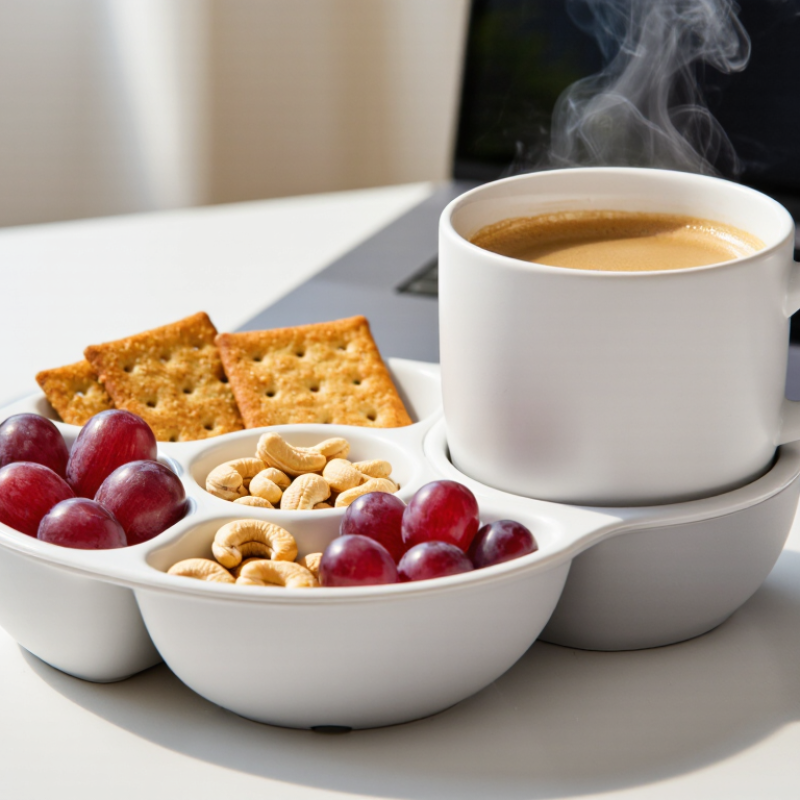
How to Choose the Best Cup With Snack Bowl for Buyers?
Identify the Intended Use and User Needs
Start with the person and setting, not the product’s appearance. A commuter may need a secure lid and a shape that fits a car cup holder. A child may need an easy-grip cup, a shallow snack compartment, and parts that are simple to clean. For desk use, capacity and stable placement may matter more than portability. Small details count. A lid that is hard to open can make a convenient cup frustrating.
The 2024 IFIC Food & Health Survey reports that 56% of Americans snack at least once daily. That finding suggests snack access is part of many people’s routines, but it does not define every buyer’s needs. Ask what the cup will hold, how long it will be carried, and whether the user drinks while walking. A design suited to dry crackers may not work well for sticky fruit. Buyers can overlook cleaning at first; that is worth reconsidering.
Tips: Match bowl depth to the snack, and check whether the cup fits the user’s hand and bag. Test the lid and drinking opening before ordering samples. For shared or child use, inspect removable parts and cleaning instructions. Choose based on real routines, not assumptions.
A standard U.S. cup is about 237 mL. A 300 mL cup holds more. Check whether the stated capacity is brim-full or practical fill. Small difference. Big effect.
Not by itself. Thirty grams of airy chips can take up more space than 30 grams of nuts. Test the bowl with the actual snack.
Check its depth and stability. A shallow bowl may spill, while a deep one can make a small portion look smaller. Try lifting the cup with a few crackers inside.
Stainless steel resists dents but may feel heavy. Ceramic feels sturdy on a table but can chip if dropped. Plastic is lighter, though scratches and heat may shorten its useful life.
Look for smooth, accessible surfaces. Crumbs and moisture can collect in tight seams. Run a finger along the edges. A small wobble matters.
Ask for documentation confirming food-contact suitability and clear cleaning instructions. Check temperature and dishwasher limits. Vague care details deserve a follow-up question.
Compare the same cup capacity, bowl size, and order volume. Ask whether lids, packaging, and shipping are included. Small details matter.
Fill the cup and check its stability. See whether the bowl sits securely and the lid closes without force. Inspect rims, seams, and surface finish. I used to trust the best-looking sample. That was not enough.
Ask about sample lead times, production schedules, packing, and defect handling. Request written specifications and inspection criteria. Clear answers count, too.
Choosing the best Cup With Snack Bowl starts with understanding how it will be used and who will use it. Consider whether it is intended for travel, work, school, or everyday home use, and think about preferred drink and snack portions. Compare the cup and bowl capacities to make sure both suit the user’s needs without making the set too bulky or difficult to carry.
Next, assess the materials for durability, ease of handling, and suitability for food and drinks. A secure lid, comfortable grip, and practical shape can improve everyday use, while simple-to-clean parts help with maintenance. Finally, compare price with overall quality, construction, and supplier information. Reviewing these factors together can help buyers choose a convenient, reliable set that fits their budget and routine.

 Charmlite Cup