Top 10 Plastic Drink Bucket With Handle Suppliers

Time:2026-11-25 Author:Liam
0%

A Plastic Drink Bucket With Handle may look simple, but its performance depends on details buyers can feel: a smooth rim, a steady grip, and a base that stays level when filled. For distributors, caterers, and event suppliers, the right manufacturer must balance capacity, material consistency, handle strength, print quality, and dependable lead times. Small flaws matter. A sharp seam or loose handle can quickly undermine confidence.

Industry reports provide useful context, though they do not measure this product category alone. Plastics Europe’s Plastics—The Fast Facts 2024 reports that global plastics production reached 413.8 million tonnes in 2023. The OECD’s Global Plastics Outlook reports that 353 million tonnes of plastic waste were generated in 2019, with only 9% ultimately recycled. These figures make material choices and end-of-life planning relevant questions when comparing suppliers. They do not, by themselves, prove that one bucket design is more sustainable.

Ellen MacArthur, founder of the Ellen MacArthur Foundation, has highlighted a guiding circular-economy principle: “designing out waste and pollution, keeping products and materials in use, and regenerating natural systems.” Applied to bucket sourcing, that principle encourages buyers to ask about resin specifications, reusability, and practical recycling guidance. Our Top 10 Plastic Drink Bucket With Handle Suppliers guide focuses on those questions, alongside product range, customization, quality controls, and service. It is a starting point, not a substitute for samples and factory checks. Some comparisons remain imperfect; supplier claims should be verified before purchase.
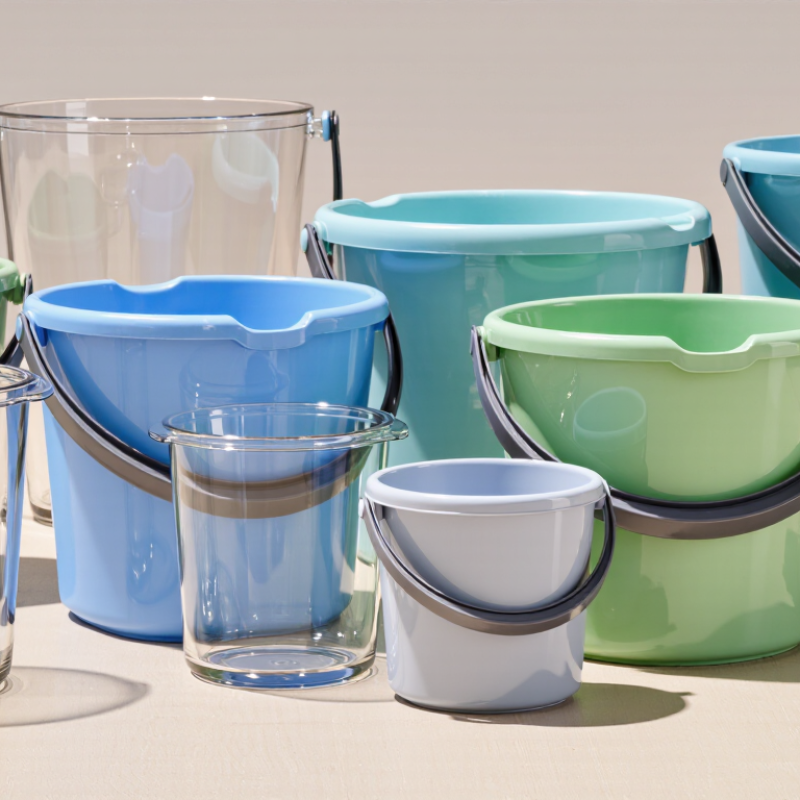
Top 10 Plastic Drink Bucket With Handle Suppliers

Understanding the Market for Plastic Drink Buckets With Handles

Plastic drink buckets with handles serve a practical niche within a much larger packaging market. Grand View Research estimated the global plastic packaging market at USD 431.5 billion in 2023, with projected growth through 2030. That figure covers many packaging types, not drink buckets alone. Still, it signals why buyers compare capacity, resin consistency, and delivery reliability. Plastics Europe reported global plastics production of 413.8 million tonnes in 2023. Scale is substantial. Yet a small bucket’s performance depends on details that broad market totals cannot show.

For buyers, handle attachment and rim strength deserve close inspection. A full bucket can strain its handle when carried across a patio or catering area. Ask suppliers for load-test methods, wall-thickness tolerances, and samples filled to the intended capacity. Check whether lids fit securely and whether buckets nest without sticking. Food-contact suitability should be confirmed for the intended use, rather than assumed from appearance. A neat catalog photo can still hide a weak hinge. That is easy to overlook. Compare quoted prices alongside minimum order quantities, mold options, and shipping protection; low unit cost may mean little if handles arrive cracked. Include a simple trial: fill, lift, and inspect after repeated use.

Criteria for Evaluating Plastic Drink Bucket Suppliers

A reliable plastic drink bucket supplier should explain the material, capacity, and handle design in practical terms. Ask whether the bucket is made from food-contact-suitable plastic for your intended use, and request supporting documentation. Vague claims are not enough. Check wall thickness, rim finish, and stated capacity; a bucket that looks sturdy in a photograph may flex when filled with ice. The handle matters just as much. Ask how its attachment points are tested and whether the supplier can provide a sample for a filled-bucket lift test.

Evaluate consistency, not just the sample. Request details on inspection procedures, production tolerances, packaging, minimum order quantities, and realistic lead times. If your order includes several colors or sizes, confirm how each variation is checked. Clear answers help, but a polished catalog is not proof of dependable production. I would compare written specifications with a physical sample, then ask the supplier to explain any differences. That takes time. It can still miss problems that appear only during repeated use, so keep feedback from actual staff or customers. A small trial order may reveal more than another sales call.

Top 10 Plastic Drink Bucket With Handle Suppliers: Evaluation Criteria

Suggested weighting for comparing suppliers of plastic drink buckets with handles.

The percentages are an illustrative procurement scoring model, not ratings of specific suppliers. Prioritize food-contact compliance, material durability, and delivery reliability, then adjust the weights to fit your requirements.

Profiles of 10 Plastic Drink Bucket With Handle Suppliers

A useful supplier profile starts with the product, not a sales promise. Supplier 1 specializes in lightweight buckets for festivals, while Supplier 2 focuses on thicker walls for repeated handling. Supplier 3 offers several handle styles, including molded grips and attached wire options. Check how each handle feels when the bucket is full. Small details matter.

Supplier 4 serves food-service buyers and can discuss material suitability for intended uses. Supplier 5 provides custom colors, though sample approval may take extra time. Supplier 6 supports smaller orders, which can help during early testing. Supplier 7 emphasizes large-volume production and consistent dimensions. Ask for recent measurements. Supplier 8 offers printed decoration, but confirm how artwork looks on curved surfaces. Supplier 9 produces nested buckets to save storage space. That sounds simple, yet stacking can be awkward if rims vary. Supplier 10 works with distributors and may offer flexible packing arrangements.

Compare samples before placing a larger order. Look for a smooth rim, a secure handle attachment, and a base that sits flat on a counter. Ask about capacity, wall thickness, packaging, lead times, and inspection methods. A polished catalog is useful, but it cannot show every flaw. Some suppliers may answer slowly; treat that as a point to clarify, not automatic proof of poor quality.

Comparing Product Options, Customization, and Certifications

When comparing plastic drink bucket suppliers, look beyond capacity and price. Common options include polypropylene for lightweight buckets and high-density polyethylene for toughness. Check wall thickness, rim strength, handle attachment, and whether buckets nest without sticking. A loaded bucket can swing; a thin wire handle may cut into fingers. Small details matter. Ask for samples filled with water, not just catalog photos. OECD’s Global Plastics Outlook reported 353 million tonnes of plastic waste worldwide in 2019, with only 9% recycled. Plastics Europe reported 400.3 million tonnes of global plastic production in 2022. These figures make material choice and end-of-life claims worth checking, not assuming.

Customization can include volume marks, lid fit, molded colors, and printed graphics. Request the resin grade, colorant details, and food-contact declarations for the exact finished product. Ask for migration-test reports where relevant, and confirm that any stated certification covers the production site and product scope. ISO 9001 describes a quality-management system; it does not, by itself, certify a bucket as food-safe. A logo alone proves little. Handle pull tests and leak checks are useful evidence, too. One awkward trade-off remains: thicker walls can improve stiffness, but they also add material and shipping weight. Ask suppliers to explain that balance with sample specifications and test records.

How to Select and Source the Right Supplier

When comparing plastic drink bucket with handle suppliers, begin with the way the bucket will be used. Check its capacity, rim shape, wall thickness, and handle grip. A filled sample should feel balanced, not awkward or sharp at the handle joints. Small details matter. Ask for samples in the exact resin and color you plan to order, since appearance and stiffness can change between materials.

A capable supplier should explain its material options, production process, and quality checks in plain language. Request current test reports relevant to your intended use, plus clear information about whether the bucket is suitable for food contact. Ask how dimensions and handle strength are checked during production. If answers stay vague, pause. A polished catalogue is not proof of consistent output. I have found that a simple written specification prevents more confusion than a long email thread.

Before placing a large order, compare minimum quantities, tooling charges, lead times, and packing details. Confirm how buckets are nested and protected; scuffed surfaces can become a real issue in transit. Ask whether the supplier can provide a small trial run and agree on an inspection method before production. One point is easy to miss: the cheapest unit price may not include the packaging or checks your shipment needs. Keep the quotation and approved sample together, and record any changes in writing.

FAQS

What should buyers check before choosing a plastic drink bucket?

Check its capacity, wall thickness, rim strength, and handle attachment. A full bucket can strain the handle during a short carry.

How can I test a bucket’s handle?

Fill a sample to its intended capacity, then lift it several times. Look for flexing, cracks, or loose attachment points. A quick lift may not reveal everything.

Does a food-safe appearance confirm suitability?

No. Ask for documentation confirming the plastic is suitable for your intended food-contact use. Appearance alone proves little.

Should buyers inspect the bucket rim and lid?

Yes. Check the rim for rough edges and confirm the lid fits securely. Small fit problems can become irritating during service.

What should I ask about production quality?

Request inspection procedures and production tolerances. Ask how consistency is checked across different sizes or colors.

Is a sample enough to evaluate a supplier?

A sample helps, but it may not represent every production run. Compare written specifications with the sample, then consider a small trial order.

What details matter beyond the unit price?

Compare minimum order quantities, lead times, packaging, and shipping protection. A low price matters less if handles arrive cracked.

How can buyers check whether buckets are easy to store?

Ask whether buckets nest without sticking, then test the samples yourself. This detail is easy to overlook, and I might overlook it too.

Conclusion

This guide explores the market for Plastic Drink Bucket With Handle products, including the needs they serve in food service, events, retail, and other everyday settings. It outlines practical criteria for evaluating suppliers, such as material quality, product consistency, production capacity, communication, lead times, and customer support. Profiles of ten supplier types offer a structured way to compare potential sources without focusing on brand names.

The guide also reviews differences in bucket sizes, shapes, colors, lid options, and customization, along with the importance of checking relevant quality documentation and certifications. It concludes with a straightforward sourcing approach: define your requirements and expected order volume, request samples and clear quotations, compare supplier capabilities, and confirm delivery details before placing an order.

Liam

Liam

Liam is a dedicated marketing professional with a profound expertise in the industry, where he excels at highlighting the unique advantages of our core products. With a keen understanding of market trends and consumer needs, Liam frequently updates our company’s professional blog, providing......