Choosing Plastic Wine Glasses With Logo for wholesale requires more than comparing prices. Buyers need to balance appearance, durability, customization, and practical ordering details. A clear logo should remain legible on curved surfaces, while the glass itself should feel steady in the hand. Small details matter.
This guide introduces ten options for events, hospitality, promotions, and retail programs. It considers factors such as capacity, shape, material, print method, minimum order quantities, and packaging. A supplier’s sample can reveal details a product photo cannot: the rim finish, the weight, and how the decoration looks under indoor lighting. Ask for material specifications and product documentation suited to your intended use. Confirm artwork requirements, production timing, and shipping terms before placing a large order.
Not every option fits every buyer. A lightweight cup may suit a large outdoor gathering, while a sturdier design may better serve repeated use. Logo placement can also affect both visibility and cost. There are trade-offs.
The comparisons below are intended to support a more informed shortlist, not replace hands-on checks or supplier discussions. Some listings provide limited detail, and that deserves a closer look. Use the options as a starting point, then judge them against your audience, budget, and service needs.
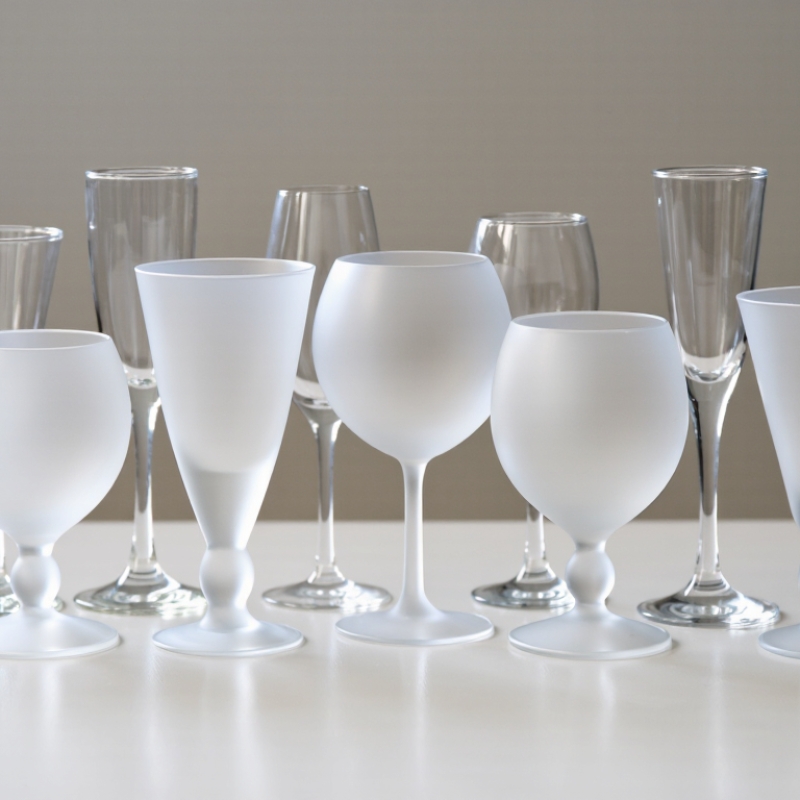
Plastic wine glasses vary in clarity, weight, and feel. PET is often chosen for clear bowls that show a drink’s color. It can suit events where lightweight service matters, though scratches may become visible with repeated handling. Polypropylene feels more flexible and is usually less glass-like. Some buyers prefer a sturdier copolyester for repeated use, but the added cost deserves a sample test.
Shape affects both presentation and printing. A classic stemmed glass looks familiar, while a stemless cup is easier to pack and less prone to tipping on crowded tables. Check the rim, bowl curve, and base before approving a large order. Small differences matter. A logo may distort on a sharply curved surface. I would inspect a filled sample, not just a flat artwork proof.
Logo options include screen printing, pad printing, and applied decals, depending on the shape and order quantity. Printing on the bowl creates strong visibility, but placement should leave room for fingers and keep the drink visible. A small mark on the base is subtler. Ask the supplier to confirm ink suitability for the intended use, washing guidance, and abrasion resistance. Then rub a printed sample with a damp cloth. It is a simple check, not a guarantee. Colors can also shift slightly between digital proofs and production, so approve a physical sample when consistency matters.
A comparison of representative densities for plastics commonly used in drinkware, in grams per cubic centimeter (g/cm³).
Values are typical reference figures; exact density varies by resin grade and product formulation. Density alone does not determine durability or suitability. Logo decoration options may include screen printing, pad printing, and UV printing, depending on the material, artwork, and order requirements.
When comparing the top 10 logo-ready plastic wine glasses, assess more than appearance. Check capacity, rim feel, stem strength, stackability, and how the logo looks on the actual cup. Reusable polycarbonate styles suit repeated service; lightweight PET options may better fit one-off events. Ask suppliers for material specifications, print-area dimensions, sample lead times, and pricing at your target quantity. Fit matters.
Decoration can change the buying decision. A curved bowl may distort a wide logo, while a narrow print area can make small text hard to read. Compare print durability after washing, color consistency, and setup costs—not just the quoted unit price. Plastics Europe’s Plastics—the Fast Facts 2023 reports 400.3 million tonnes of plastics produced worldwide in 2022. That figure covers all plastics, not drinkware, but it underlines why material choice and reuse claims deserve careful checking. A polished sample can still hide a weak stem. Test first.
Tips: Request samples from your finalists and print your real artwork on them. Check the logo under event lighting, then inspect the glass after handling and washing. Compare total landed cost, including decoration, freight, and any mold or setup fees. One imperfect detail is useful to catch early.
Comparison of common logo-ready plastic wine-glass formats. Capacities are typical market ranges, not guaranteed specifications; confirm dimensions, material, print area, minimum order quantity, and food-contact documentation with the supplier before ordering.
| No. | Glass Style | Typical Capacity | Common Material | Construction | Common Logo Methods | Wholesale Advantages | Points to Check |
|---|---|---|---|---|---|---|---|
| 1 | Classic stemmed wine glass | 5–8 fl oz (150–240 ml) | Polystyrene (PS) or PET | One-piece or bowl-and-stem design | Screen printing; pad printing | Familiar wine-glass shape; suitable for catered events and tastings | Check stem strength, rim finish, and whether the glass is intended for single or repeated use |
| 2 | Large-bowl stemmed wine glass | 10–14 fl oz (300–415 ml) | PET, PS, or reusable copolyester | Wide bowl with a long stem | Screen printing; pad printing | Larger decoration area and a more substantial presentation | Confirm overall height, bowl clearance for printing, and packaging protection |
| 3 | Stemless wine glass | 10–16 fl oz (300–475 ml) | PET, PS, or reusable copolyester | Low, stem-free cup with a rounded bowl | Screen printing; pad printing; transfer printing | Compact to pack and less vulnerable to stem breakage | Check the usable print area and whether the shape fits standard drink holders |
| 4 | Fluted stemmed wine glass | 5–8 fl oz (150–240 ml) | PS or PET | Stemmed bowl with molded flutes | Pad printing; screen printing on a smooth panel | Decorative molded appearance without a separate glass-like component | Raised fluting can limit the size and placement of a clean printed logo |
| 5 | Reusable stemmed wine glass | 8–12 fl oz (240–355 ml) | Polypropylene (PP) or copolyester | Reusable design; some models have a detachable stem | Screen printing; pad printing | Can suit multi-event programs when the product is designed and labeled for repeated use | Verify care instructions, intended reuse, and whether the stem can be securely assembled |
| 6 | Reusable stemless wine glass | 10–16 fl oz (300–475 ml) | PP, SAN, or copolyester | Thicker-walled, stem-free construction | Screen printing; pad printing; transfer printing | Practical shape for outdoor service and repeat-use settings | Request the supplier’s care guidance and test printed samples for scuff resistance |
| 7 | Clear PET stemmed wine glass | 5–8 fl oz (150–240 ml) | PET | Lightweight, clear molded construction | Screen printing; pad printing | Clear body displays the drink and works with simple one-color artwork | Ask whether the specific item is intended for single use or reuse; do not assume heat resistance |
| 8 | Colored plastic wine glass | 5–12 fl oz (150–355 ml) | PS, PP, or PET, depending on the item | Stemmed or stemless; molded in a solid or translucent color | Pad printing; screen printing; contrasting transfer print | Color can support event themes and make tableware easier to identify | Check color availability, logo contrast, and whether color is molded in or applied as a coating |
| 9 | Champagne-style plastic glass | 4–6 fl oz (120–180 ml) | PS or PET | Flute or narrow-bowl shape, usually stemmed | Pad printing; screen printing on a smooth area | Useful for sparkling-wine service, receptions, and tasting events | The narrow shape limits the print area; confirm logo size and glass stability when filled |
| 10 | Plastic wine goblet | 8–12 fl oz (240–355 ml) | PS, PP, or copolyester | Broad bowl with a short stem and broad base | Pad printing; screen printing | Shorter profile can be convenient for buffet service and storage | Compare base width, stackability, and the available flat area for the logo |
A plastic wine glass should fit the occasion before it carries a logo. For outdoor receptions, a stemless shape is easier to hold on grass or crowded patios. Formal dinners may call for a clear, stemmed design that echoes glassware without the weight. Small details matter. Rim thickness, bowl shape, and base stability affect how the cup feels during use.
For wholesale orders, match decoration to both the surface and the event. A compact one-color logo can stay readable on a curved bowl, while a larger mark may suit a straight-sided cup. Ask for a sample with the actual print method; artwork can look crisp on screen and blur around a curve. Check how cups stack, too. Storage space is often overlooked until cartons arrive.
Customer needs vary by setting. A tasting event may benefit from a smaller bowl that encourages measured pours, while a festival may need durable cups that are easy to carry. Confirm the material’s intended use and care instructions with the supplier, then test the sample with the drink being served. We sometimes focus too much on logo size. A cup that looks polished but feels awkward can weaken the experience, even when the print is excellent.
For logo-printed plastic wine glasses, compare the delivered cost, not just the unit price. Ask suppliers to separate glass, print setup, packaging, freight, and sample charges. A low quote can hide expensive artwork setup or a costly reorder. Check whether pricing changes at several order quantities, such as 500, 1,000, and 2,500 pieces. Small differences matter. Confirm the minimum order for each color and print method; a mixed-color order may not qualify for the advertised minimum. Request a printed sample and inspect the logo under indoor lighting. Fine lines can blur on curved, lightweight cups.
Minimum orders mean little without dependable production. Ask for documented lead times, recent on-time delivery rates, defect handling, and written approval of the final artwork. McKinsey’s 2020 survey of supply-chain leaders found that 93% planned to make their supply chains more resilient. That figure is not a drinkware quality score, but it shows why backup capacity and clear communication matter. Check whether the supplier can replace misprinted units and provide progress updates before shipment. One awkward truth: a perfect sample does not guarantee a perfect bulk run. For a first order, consider a smaller test batch, even if its per-unit price is higher. Compare the delivered sample with the production proof, and keep both for inspection.
Before ordering plastic wine glasses with a logo, prepare artwork for the actual cup shape. A design that looks balanced on a flat screen may curve awkwardly around a bowl. Request a digital proof showing the logo’s size, position, and print colors. Keep fine lines and tiny text to a minimum. They can blur on curved plastic. Small details matter.
Ask for a physical sample before approving bulk production. Check the logo under indoor and outdoor light, then fill the glass and hold it at normal viewing distance. Does the print remain readable? Check the rim, stem, and base for visible flaws, and confirm the sample matches the agreed material and decoration method. One sample is not a guarantee of a flawless shipment. Still, it can reveal problems early. Record any changes in writing.
Build time into the schedule for proof approval, sample review, production, and shipping. Confirm quantities, carton dimensions, delivery address, and the date the goods must arrive. If the glasses will be used at an event, allow room for a delayed shipment or a small number of damaged pieces. I have seen plans become too tight because approval took longer than expected. That part is easy to underestimate. Request progress updates and inspect cartons when they arrive, rather than waiting until the event week.
Check capacity, rim feel, stem strength, stackability, and logo visibility. A sturdy-looking sample can still have a weak stem.
Reusable polycarbonate may suit repeated service. Lightweight PET can fit one-off events better. Confirm the exact material before ordering.
Print your actual artwork on a sample. Check small text and wide designs on the curved bowl. Look under event lighting.
Handle and wash it, then check for fading, blurred lines, or color changes. The sample may not match bulk production perfectly.
Compare delivered costs, including printing, packaging, freight, samples, and setup fees. Request pricing at 500, 1,000, and 2,500 pieces.
Minimums may vary by color and print method. Mixed colors might not qualify for the advertised minimum. Ask before approving artwork.
Request written lead times, recent on-time delivery rates, defect procedures, and production updates. Clear answers matter.
Not really. Consider a smaller test batch, even if each cup costs more. Keep the approved sample and production proof for comparison.
This guide to Plastic Wine Glasses With Logo helps wholesale buyers understand how material, shape, and decoration choices affect appearance, durability, and usability. It compares common logo-ready styles and explains how to match glass designs with different events, brand identities, and customer preferences. From reusable options for gatherings to lightweight designs for larger occasions, the right choice depends on the intended setting, desired look, and practical requirements.
The article also outlines how to assess wholesale pricing, minimum order quantities, and supplier reliability before placing an order. Buyers can plan the process by preparing artwork, requesting samples, confirming production details, and coordinating delivery timelines. Considering each step in advance can make it easier to select suitable glasses, communicate expectations clearly, and manage a wholesale purchase with confidence.

Charmlite Cup